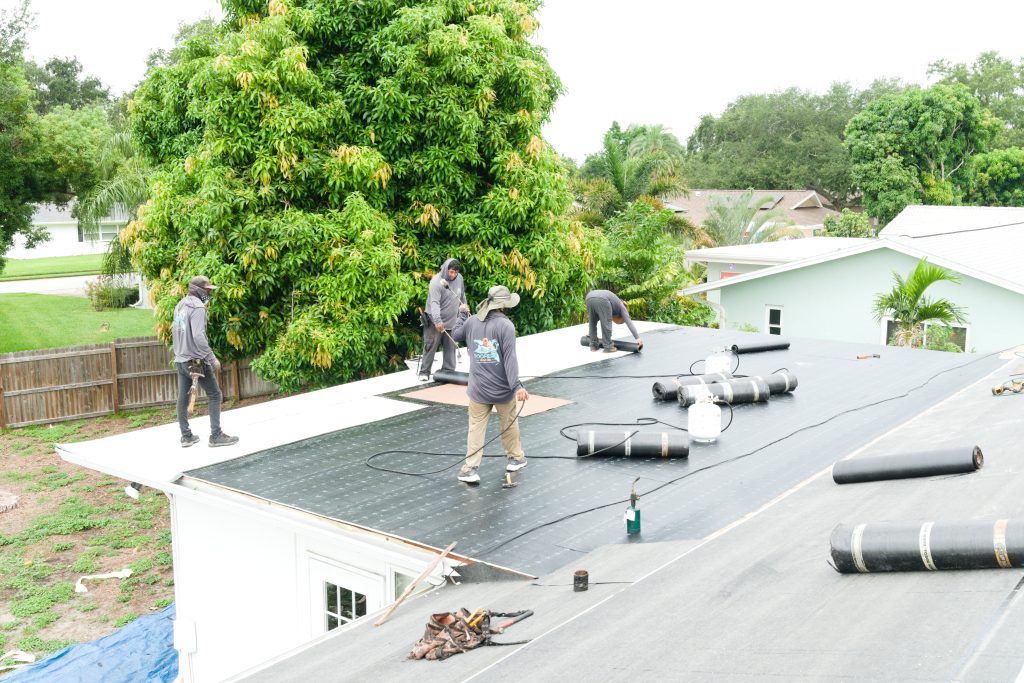
Flat roofs are efficient, practical, and common on commercial buildings, additions, porches, multifamily properties, and some modern homes. They are also less forgiving of drainage and membrane problems than steep-slope roofs. Water moves more slowly across a low-slope surface, so a small seam failure, puncture, flashing defect, or clogged drain can stay wet long enough to create a larger leak.
National search demand for “flat roof repair” is high because the symptoms are common and the decision can be confusing. The good news is that many flat-roof problems are repairable when they are found early. The bad news is that delayed repairs can wet insulation and decking below the membrane, increasing the final cost.
Roofers Near Me provides flat roof repair and installation throughout Tampa Bay and can help determine whether a local repair or full replacement is the better financial choice.
How Much Does Flat Roof Repair Cost?
There is no honest single price for every flat-roof repair. A small accessible patch may cost a few hundred dollars, while repairs involving wet insulation, extensive membrane replacement, drainage reconstruction, flashing, or deck damage can run into the thousands. Commercial repairs can also cost more when roof access, safety requirements, equipment curbs, or operating-hour restrictions complicate the job.
The most useful estimate breaks cost into the cause of failure, damaged area, roof system, material, access, moisture below the surface, and whether the repair must integrate with an existing warranty.
1. Ponding Water
Flat roofs are not supposed to be perfectly level. They should direct water toward drains, scuppers, or gutters. When water remains in the same areas long after rain, it can accelerate membrane deterioration and expose weaknesses in seams and flashing.
A contractor should determine why the water is collecting. The fix may involve clearing drainage, correcting a local low spot, repairing insulation, adding tapered insulation during larger work, or improving drain capacity. Simply coating over a ponding area does not solve the underlying geometry.
2. Membrane Punctures and Tears
Foot traffic, dropped tools, storm debris, sharp equipment, or service work around HVAC units can puncture a roof membrane. Small punctures can be difficult to see but may allow water to migrate beneath the surface.
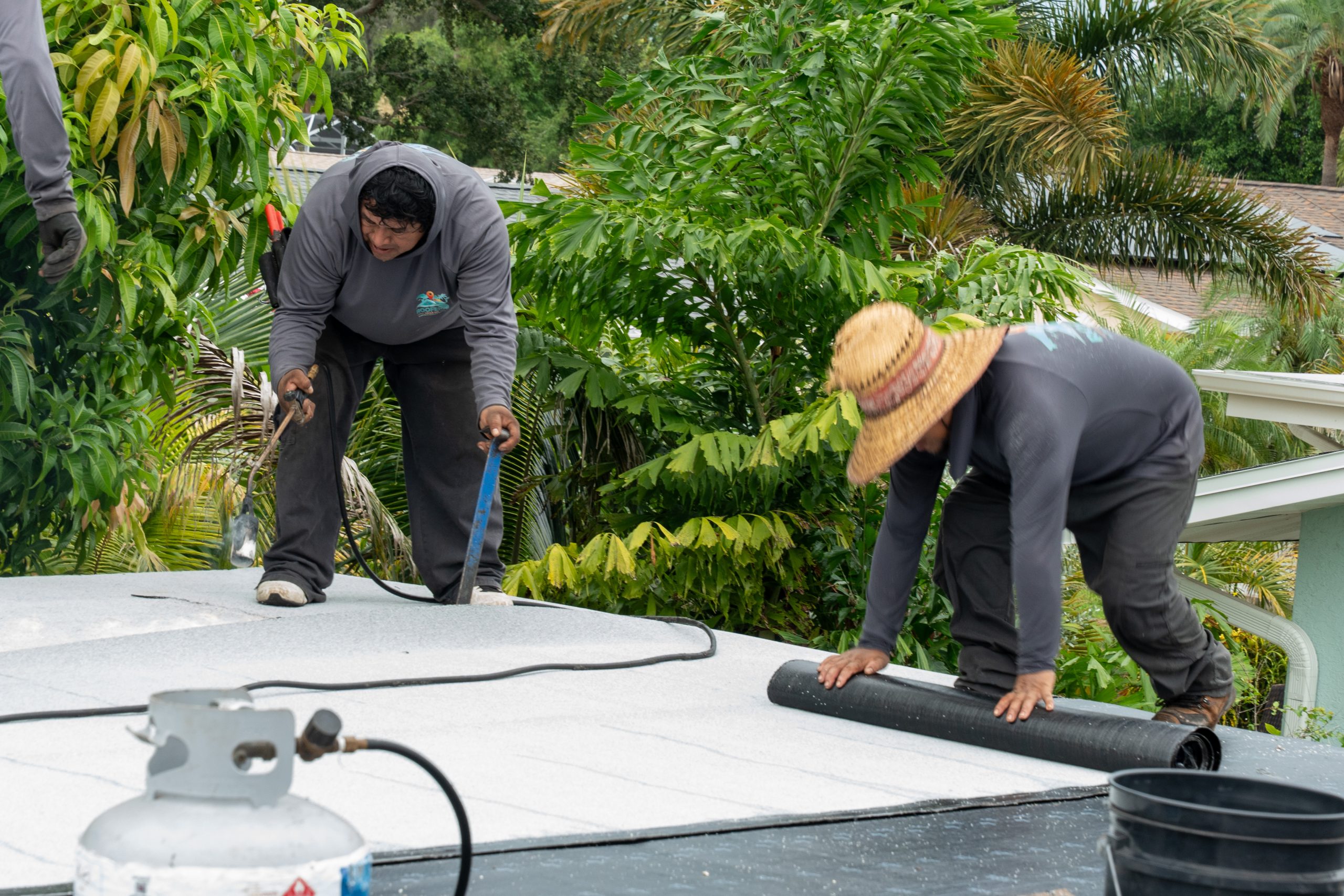
Repairs normally involve cleaning and preparing the area and installing a compatible patch using the system manufacturer’s method. If you are unsure which material is on the roof, a professional roof repair inspection can prevent an incompatible patch from creating another problem.
3. Open Seams
Single-ply membranes depend on reliable seams. Heat-welded or adhered seams can fail because of installation issues, aging, movement, contamination, or repeated stress. Once an opening develops, wind-driven rain can enter quickly.
Seam repairs can be straightforward when damage is limited. If many seams are failing across an older roof, replacement may deliver better ROI than paying for repeated repairs.
4. Flashing and Penetration Leaks
Roof edges, walls, curbs, vents, pipes, drains, and mechanical penetrations are common leak locations because multiple materials and planes meet there. Sealant alone is not always a durable repair.
A good contractor looks at the full flashing detail and movement around the penetration. Commercial buildings with many rooftop units can have dozens of these vulnerable transitions, which is why scheduled inspections matter.
5. Blisters and Trapped Moisture
Blisters or raised areas can signal trapped air or moisture within the roofing assembly. The correct response depends on the roof type, size of the blister, underlying material, and whether moisture is present.
Cutting into the roof without a diagnosis can make the problem worse. Moisture scans, core samples, or targeted investigation may be useful on larger commercial roofs.
6. Damaged or Wet Insulation
Once water gets below the membrane, insulation can lose performance and may remain wet even after the visible surface is patched. That can increase cooling costs, create odors, damage decking, and hide continuing moisture movement.
Commercial owners should ask whether the repair quote includes removal and replacement of wet insulation or only membrane work. Roofers Near Me’s commercial roofing service can address low-slope systems used on business and warehouse properties.
Repair or Replace: Which Has Better ROI?
Repair makes sense when damage is isolated and the surrounding roof remains in good condition. Replacement becomes easier to justify when leaks occur in multiple areas, insulation is widely wet, seams are failing throughout the system, the roof has exceeded its practical service life, or repairs consume an increasing maintenance budget.
If replacement is the better option, compare the full life-cycle cost instead of only the initial project price. A new membrane with improved insulation and drainage may lower maintenance risk and reduce disruption for years. Roofers Near Me also provides complete roof replacement when repairs are no longer cost-effective.
How to Reduce Flat Roof Repair Costs
Inspect the roof after major storms. Keep drains and scuppers clear. Limit unnecessary foot traffic. Use walk pads around regularly serviced equipment. Document every repair so future contractors understand the roof history. Fix small problems before moisture spreads below the membrane.
For active leaks after severe weather, a contractor with emergency roofing capability can help protect the building while a permanent scope is developed.
FAQs
Can a flat roof be repaired without replacing it?
Yes. Localized punctures, seams, flashing failures, and small damaged areas are often repairable if the surrounding system remains sound.
Why does my flat roof keep leaking in the same area?
Repeated leaks can mean the original repair did not address the true source, water is traveling beneath the membrane, drainage is poor, or several nearby details are failing.
Is ponding water always a problem?
Brief water after rain can occur, but persistent ponding deserves evaluation because it adds load and can accelerate deterioration or expose weak details.
How do I know if insulation under the roof is wet?
Signs include recurring leaks, soft areas, staining, odors, or reduced thermal performance. Contractors may use targeted moisture investigation on larger roofs.
Should I coat my flat roof instead of replacing it?
A coating can be useful on some eligible roofs, but it is not a cure for saturated insulation, structural problems, or major drainage defects. The existing roof must be evaluated first.
Get a Flat Roof Repair Estimate
If your low-slope roof has a leak, ponding, seam failure, puncture, or storm damage, Roofers Near Me can inspect the condition and explain the repair options. A clear diagnosis is the first step toward controlling both the immediate cost and the long-term maintenance budget.