When hiring a roofer in Clearwater, FL, look for an active Florida Certified Roofing Contractor (CCC) license, proof of insurance, a written itemized estimate from an in-person inspection, local experience with coastal conditions, and a workmanship warranty separate from the material warranty. Roofing is one of the more consequential home repairs you’ll make, both financially and in terms of protecting the rest of your property — and it’s also, unfortunately, an industry where storm season brings out opportunistic operators alongside legitimate local contractors. Knowing what separates the two makes the hiring decision much less stressful.
If you’re researching roofing companies in the area, you can also visit the Roofers Near Me Florida to learn more about available roofing services.
Verify the License First, Before Anything Else
Florida requires all roofing contractors to hold a Certified Roofing Contractor license with a CCC prefix, issued by the Department of Business and Professional Regulation. This is non-negotiable — verify it yourself at myfloridalicense.com rather than taking a contractor’s word for it. Unlicensed roofing work can create serious problems if you ever sell the home and the work surfaces during inspection.
Beyond the state license, ask whether they carry general liability insurance and workers’ compensation coverage. If a worker is injured on your property and the contractor isn’t properly insured, you could bear unexpected liability — this is worth confirming, not assuming.
Ask for a Written, Itemized Estimate — Not a Phone Quote
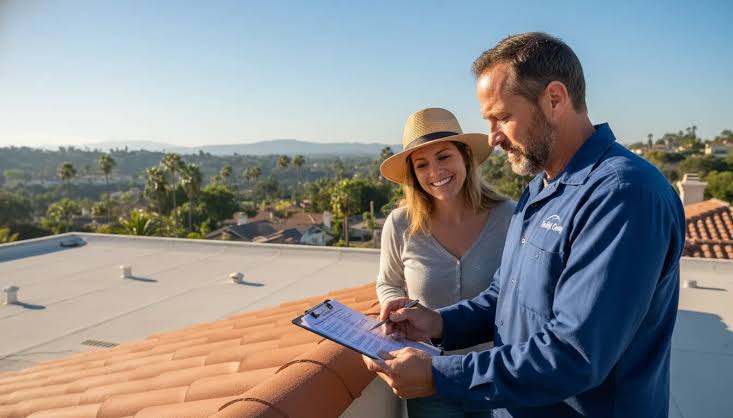
A reputable roofer inspects your roof in person before providing pricing. Be cautious of anyone willing to quote a firm price over the phone or from a satellite photo alone — real roofing conditions, including decking status and the extent of any damage, simply can’t be assessed accurately without someone actually on the roof.
Once you get an estimate, it should be itemized: material costs, labor, tear-off and disposal, permit fees, and any contingency for decking repair, laid out separately rather than bundled into one flat number. This transparency makes it much easier to compare quotes apples-to-apples between contractors.
If you’re unsure whether your roof needs a repair or complete replacement, our guide to roof replacement costs in Clearwater, FL explains some of the factors that affect replacement pricing.
Get Multiple Quotes
Pricing for the same scope of work can vary by several thousand dollars between contractors in the Clearwater area. Getting two or three written, itemized quotes isn’t about squeezing the lowest price — it’s about understanding what’s a reasonable range for your specific job and spotting outliers in either direction. A quote significantly below others often means corners are being cut somewhere (cheaper materials, no decking contingency, uninsured subcontracted labor); a quote significantly above others deserves an explanation of what justifies the premium.
Ask About Local, Coastal-Specific Experience
Clearwater’s coastal position brings specific considerations — salt air corrosion on metal components, sustained Gulf wind exposure, and installation practices suited to that environment. A contractor who works primarily inland may not automatically think to recommend salt-air-rated fasteners or extra attention to flashing sealant. It’s a fair and useful question to ask directly: how much of their work is in coastal Pinellas County specifically, and what do they do differently for homes near the water.
Our Complete Tampa Bay Roofing Guide provides additional information about roofing materials, maintenance, weather conditions, repairs, and replacement considerations throughout the Tampa Bay area.
Confirm the Warranty Terms in Writing
There are generally two separate warranties involved in a roofing job, and it’s important not to confuse them:
• Manufacturer’s material warranty, covering defects in the roofing material itself, typically provided by the shingle, tile, or metal manufacturer
• Workmanship warranty, covering the quality of the installation itself, provided by the contractor
A material warranty means nothing if the installation was done poorly and the material fails prematurely due to installer error rather than a manufacturing defect. Ask specifically what workmanship warranty the contractor offers, how long it lasts, and what it actually covers — get this in writing as part of your contract, not just a verbal assurance.
Watch for Red Flags
• Door-to-door storm chasers. After a major storm, it’s common for out-of-area contractors to canvass affected neighborhoods offering fast, cheap repairs. Some are legitimate, but many disappear before the job is finished or the warranty means anything. A local, established Clearwater contractor with a verifiable physical presence and history in the area is generally the safer choice.
• Demands for full payment upfront. A reasonable deposit is normal, but a contractor demanding the entire cost before work begins is a red flag. Standard practice is a deposit followed by payments tied to project milestones.
• Pressure to sign immediately. Legitimate contractors understand you may want to compare quotes or think it over. Heavy pressure to sign on the spot, especially paired with “today only” pricing, is a classic pressure tactic.
• No physical local address or unclear business history. A quick search should turn up a real business address, consistent online presence, and ideally reviews going back further than just the last storm season.
• Reluctance to provide license or insurance documentation. A legitimate contractor will provide this without hesitation. Hesitation or vague answers here are a serious warning sign.
Reading Reviews the Right Way
Recent reviews matter more than overall star rating alone. A contractor with mostly positive reviews but a cluster of recent complaints about missed appointments, poor communication, or unfinished work is worth more scrutiny than the star average alone suggests. Look specifically for reviews mentioning how the company handled problems, not just how smoothly things went when everything worked as planned — how a contractor responds when something goes wrong tells you more than a flawless job review does.
Questions Worth Asking Before You Sign
- Can you provide your Florida CCC license number and proof of insurance?
- Will you provide a written, itemized estimate after an in-person inspection?
- What’s included in your workmanship warranty, and for how long?
- How do you handle unexpected decking damage discovered during the job?
- What’s your typical timeline from contract signing to project completion?
- Can you provide references from recent Clearwater-area jobs?
If you’re comparing repair and replacement options, our roof repair cost guide can also help you understand the types of issues that may be addressed without a complete roof replacement.
Free Inspection and Written Quote
If you’re comparing roofers in Clearwater, we’re happy to be one of your quotes. Our team is licensed, insured, and experienced with the specific conditions coastal Pinellas County properties face.
Contact Roofers Near Me to schedule a free inspection and written estimate.
Call (727) 439-1844 for a free inspection and written estimate.
Frequently Asked Questions
How do I verify a roofing contractor’s license in Florida?
Visit myfloridalicense.com and search by the contractor’s name or license number to confirm they hold an active Certified Roofing Contractor (CCC) license. This takes only a few minutes and is worth doing before signing any contract.
Should I get multiple quotes before hiring a roofer in Clearwater?
Yes, two or three itemized quotes is a reasonable standard. Pricing for the same job can vary significantly between contractors, and comparing quotes helps you spot both red-flag lowball pricing and unjustified premiums.
What’s the difference between a material warranty and a workmanship warranty?
The material warranty, provided by the manufacturer, covers defects in the roofing product itself. The workmanship warranty, provided by the contractor, covers the quality of the installation. Both matter — a great material poorly installed can still fail.
Are door-to-door roofers after a storm legitimate?
Some are, but this is also a common approach used by out-of-area contractors who may not be around to honor warranties later. A local, established contractor with a verifiable history in the Clearwater area is generally the safer choice, even if a storm-chasing contractor’s initial pitch sounds appealing.
How much of a deposit is reasonable for a roofing job?
A partial deposit before work begins, with remaining payments tied to project milestones, is standard practice. Be cautious of any contractor demanding full payment upfront before any work has started.
Does it matter if a roofer has coastal Clearwater experience specifically?
It can matter meaningfully. Coastal conditions — salt air, sustained wind — call for specific material and installation considerations that a contractor primarily experienced with inland jobs may not automatically account for.