
Your roof in Tampa Bay works harder than almost any roof in the country. It takes daily summer downpours, UV that fades shingles in a few seasons, salt air along the Gulf beaches, and a hurricane season that runs from June 1 to November 30 every year. Add Florida’s roofing laws and a tight insurance market, and choosing, repairing, or replacing a roof here is a bigger decision than it is in most states.
This Tampa Bay roofing guide covers everything local homeowners ask us about: what Florida’s weather does to a roof, the laws that decide repair vs. replacement, which materials last longest, what a new roof costs in 2026, how to prepare for hurricanes, and how to hire a roofer you can trust. It’s written for homeowners in Pinellas, Hillsborough, Pasco, and Manatee counties, from Largo and Clearwater to St. Petersburg and Tampa.
The short answer
- Lifespan: In Tampa Bay, asphalt shingle roofs usually last 15–20 years, concrete tile 30–50 years, clay tile 50+ years, and standing seam metal 40–70 years.
- Cost: A full roof replacement on a typical 2,000 sq ft Tampa Bay home runs about $12,000–$24,000 for architectural shingles, and more for metal or tile.
- Laws: Florida’s 25% rule no longer forces a full replacement on roofs built to the 2007 Florida Building Code or later. Insurers can’t refuse coverage only because a roof is under 15 years old.
- Best material for hurricanes: Standing seam metal and properly installed concrete tile offer the strongest wind resistance.
- Hiring: Only hire a roofer with an active Florida roofing license (CCC), proof of insurance, and a permit for your job.
Why Tampa Bay roofs wear out faster
Tampa Bay roofs age faster than roofs in cooler, drier states because five local conditions attack them at once. Knowing which one is hurting your roof helps you pick the right repair and the right material.
1. Hurricanes and tropical storms. High winds lift shingle edges, break the seal strip, and peel off ridge caps. Wind-driven rain then gets under the loosened materials. Even a storm that misses Tampa Bay directly can do enough damage to shorten a roof’s life by years.
2. Heavy summer rain. Afternoon thunderstorms from June to September test every weak spot: pipe boots, flashing, valleys, and low-slope sections. Clogged gutters make it worse by backing water up under the roof edge.
3. Intense UV and heat. Attic temperatures in a Florida summer can climb well past 130°F. That heat dries out asphalt, loosens granules, and makes shingles brittle. It’s the main reason a 30-year shingle often gets 15–20 years here.
4. Humidity, algae, and mold. Those black streaks on many Pinellas County roofs are algae (Gloeocapsa magma). It’s mostly cosmetic at first, but trapped moisture feeds mold and wood rot in the decking over time. Poor attic ventilation speeds this up.
5. Salt air near the coast. Homes in Clearwater Beach, St. Pete Beach, Treasure Island, Madeira Beach, and Indian Rocks Beach face salt spray that corrodes fasteners, flashing, and standard metal panels. Coastal roofs need stainless or coated fasteners and aluminum or marine-grade metal.
The practical takeaway: a roof in Tampa Bay needs Florida-rated materials, correct installation to local wind codes, and more frequent inspections than the manufacturer’s brochure suggests.
Florida roofing laws every Tampa Bay homeowner should know
Three rules shape almost every roofing decision in Florida: the 25% rule, the roof-age insurance law, and permit requirements. Here’s what each one means in plain English.
The Florida 25% roof rule (and the 2007 code exception)
The Florida Building Code has long said that if more than 25% of a roof section is repaired or replaced within 12 months, the whole section must be brought up to current code. In practice, that often meant a full replacement.
In 2022, Senate Bill 4-D changed this. Under Florida Statute 553.844(5), if your roof was built, repaired, or replaced to the 2007 Florida Building Code or later, only the repaired portion needs to meet current code. The 2007 code took effect on March 1, 2009, so the permit date on your last reroof matters a lot.
- Roof permitted on or after March 1, 2009: You can usually repair the damaged area without replacing the whole roof.
- Roof permitted before March 1, 2009: The original 25% rule generally still applies.
- The 25% adds up: Several small repairs within 12 months count together toward the threshold.
Roof age and homeowners insurance
Florida law does not require you to replace your roof at any specific age. The pressure comes from insurers. Under Florida Statute 627.7011, an insurer can’t refuse to issue or renew your policy only because your roof is under 15 years old. If your roof is 15 years or older, you have the right to an inspection first. If that inspection shows at least 5 years of remaining useful life, the insurer can’t require replacement as a condition of coverage.
That’s why a professional roof certification or remaining-life inspection is worth having before your policy renewal.
Wind mitigation inspections and insurance discounts
A wind mitigation inspection documents how well your home resists wind: roof covering, roof deck attachment, roof-to-wall connections (hurricane straps or clips), roof shape, secondary water resistance, and opening protection. Insurers use this form (OIR-B1-1802) to calculate premium discounts. Hip roofs, 8d ring-shank nails, hurricane straps, and a sealed roof deck can all lower your premium.
My Safe Florida Home program
My Safe Florida Home is a state program that offers eligible homeowners a free wind mitigation inspection and a matching grant of up to $10,000 for hurricane upgrades. Roof-related upgrades include roof deck attachment, roof-to-wall connections, and secondary water resistance. Eligibility and funding change by cycle, so check the official site before planning around it.
Permits
In Pinellas, Hillsborough, Pasco, and Manatee counties, a reroof requires a building permit and a final inspection. Your roofing contractor should pull the permit in their name. If a roofer asks you to pull it as an owner-builder, treat that as a warning sign.
This section is general information, not legal advice. Laws and insurer rules change, so confirm details with your insurance agent or a Florida attorney.
Best roofing materials for Tampa Bay homes
The best roofing material in Tampa Bay depends on your budget, how long you plan to stay, and how close you live to the water. Standing seam metal and concrete tile last the longest and handle hurricanes best; architectural shingles cost the least upfront.
| Material | Typical Florida lifespan | Installed cost (per sq ft) | Wind resistance | Best for |
|---|---|---|---|---|
| Architectural asphalt shingles | 15–20 years | $4.50–$8 | Good (130 mph+ rated products available) | Budget-conscious homeowners, most suburban homes |
| Standing seam metal | 40–70 years | $10–$25 | Excellent | Long-term owners, coastal homes (aluminum), energy savings |
| Concrete tile | 30–50 years | $9–$19 | Excellent when properly fastened | Mediterranean and Spanish-style homes |
| Clay tile | 50+ years | $12–$21 | Excellent when properly fastened | High-end homes, historic neighborhoods |
| Flat roof (TPO, modified bitumen) | 15–20 years | $4–$10 | Good | Low-slope additions, lanais, commercial buildings |
Costs are 2026 Tampa Bay ranges including tear-off and installation. Your price depends on your roof’s size, pitch, and condition.
Asphalt shingles
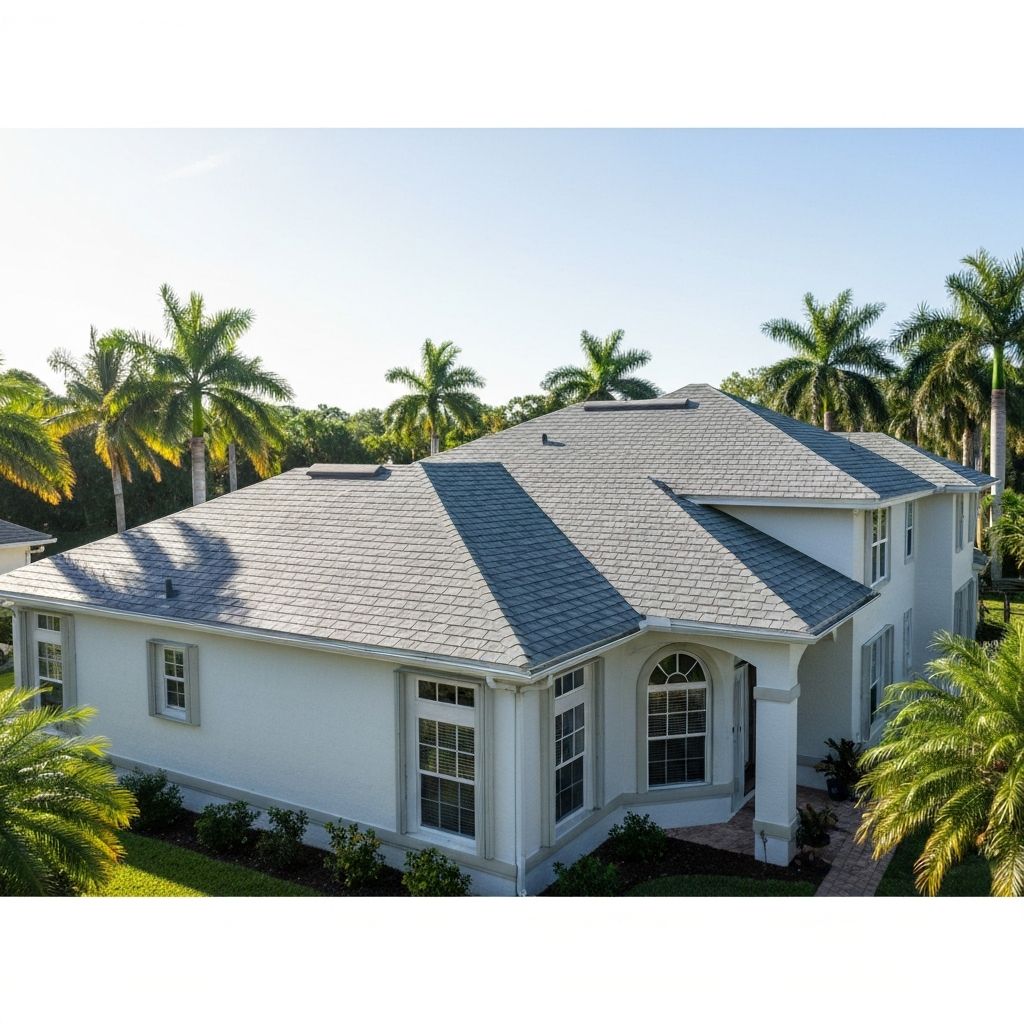
Architectural (dimensional) shingles are the most common roof in Tampa Bay. They’re affordable, come in many colors, and are easy to repair. Choose a Florida-approved product with a high wind rating and algae-resistant granules. Skip old-style 3-tab shingles; they have the lowest wind resistance. Learn more about shingle roofs.
Metal roofing
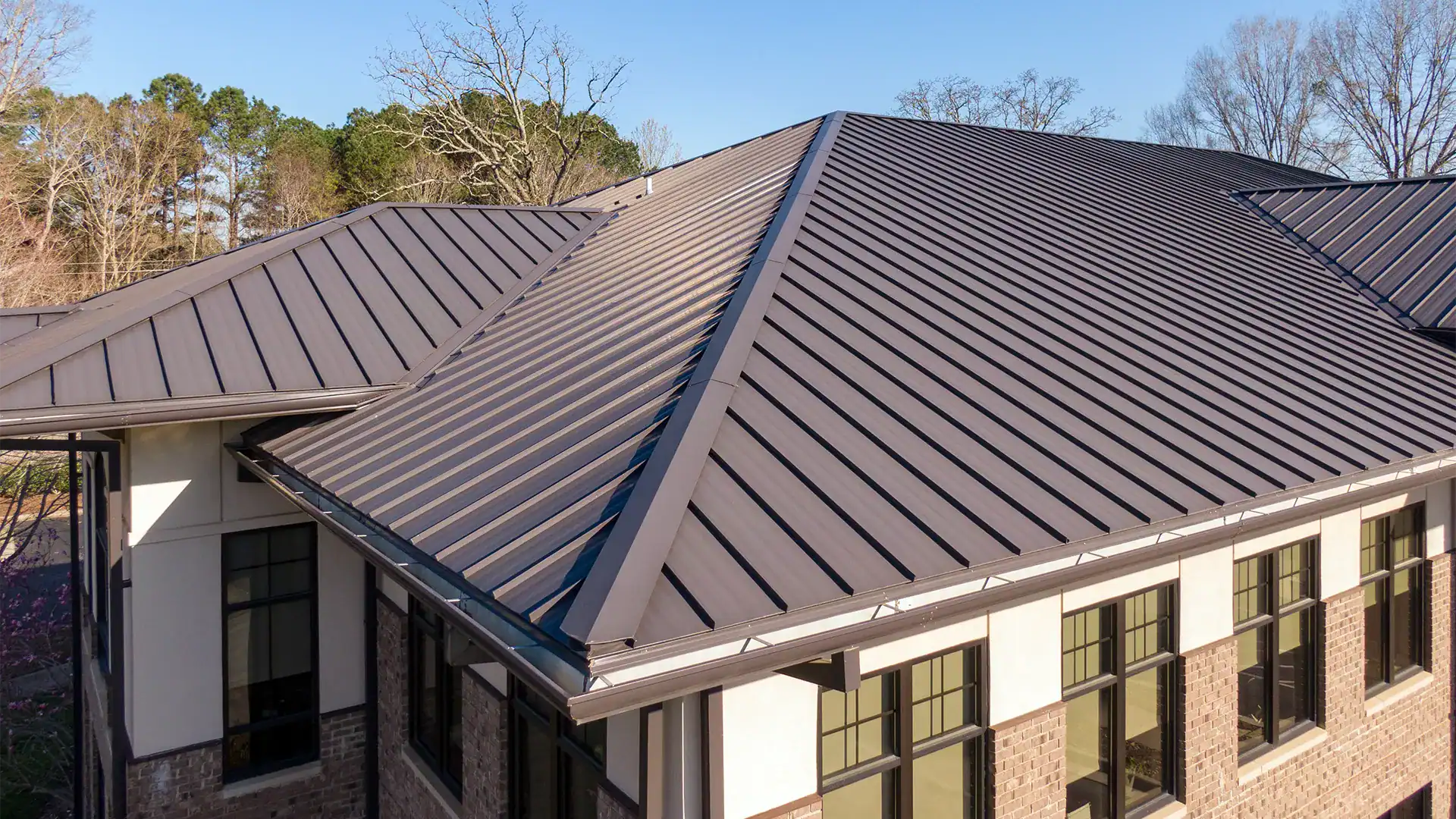
Standing seam metal is often called the gold standard for Florida roofs. It sheds rain fast, resists high winds, reflects heat to lower cooling bills, and can last two to three times longer than shingles. Near the beaches, choose aluminum or coated steel to prevent rust. Learn more about metal roofs.
Tile roofing
Concrete and clay tile fit Florida’s architecture and hold up well in heat. The tiles themselves last decades, but the underlayment beneath them usually needs replacing sooner, often around 20–25 years. A tile roof is heavy, so your home’s structure must be able to support it. Learn more about tile roofs.
Flat and low-slope roofing
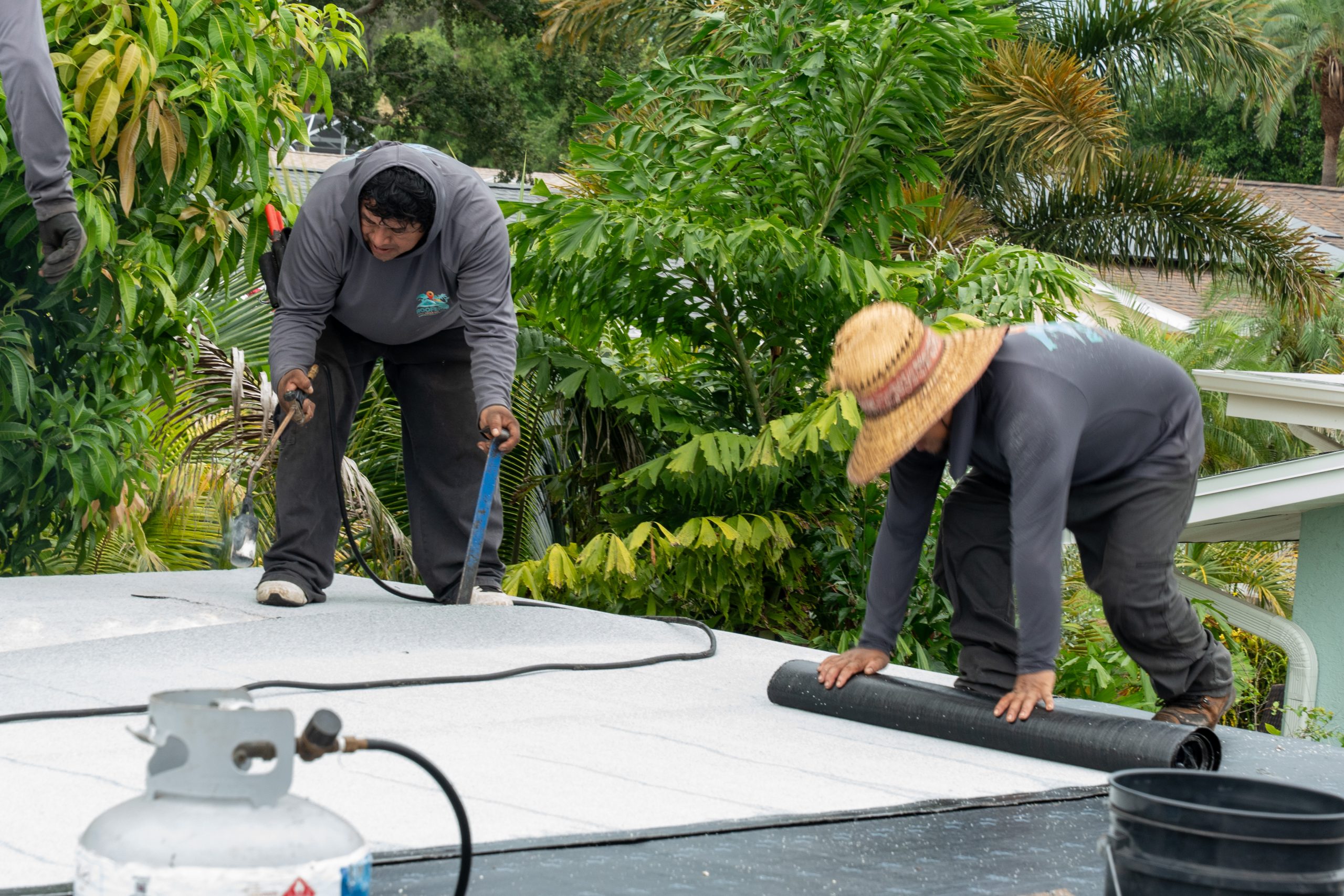
Flat roofs on additions, carports, and commercial buildings need a continuous membrane such as TPO or modified bitumen. Proper drainage is the most important factor; standing water is what ruins most flat roofs. Learn more about flat roofs.
How much does a new roof cost in Tampa Bay in 2026?
Most Tampa Bay homeowners pay between $12,000 and $24,000 to replace an architectural shingle roof on a typical 2,000 sq ft home. Metal and tile roofs usually cost $20,000 to $40,000 or more. Roof repairs are far cheaper, often a few hundred dollars for a small leak to a few thousand for storm damage.
| Project (typical 2,000 sq ft home) | Estimated 2026 cost |
|---|---|
| Minor roof repair (leak, pipe boot, flashing) | $300–$1,500 |
| Larger repair or storm damage section | $1,500–$6,000 |
| Architectural shingle replacement | $12,000–$24,000 |
| Standing seam metal replacement | $20,000–$40,000+ |
| Concrete tile replacement | $22,000–$40,000+ |
| Tile underlayment replacement (reuse tiles) | Varies widely; get an inspection |
What changes your price
- Roof size and pitch: Steeper roofs need more safety equipment and labor.
- Decking condition: Rotted plywood must be replaced before the new roof goes on. Florida code also requires specific nailing patterns during a reroof.
- Layers to remove: Tearing off more than one old layer costs more.
- Code upgrades: Secondary water resistance, updated fasteners, and new drip edge are often required.
- Permits and inspections: Required in every Tampa Bay county.
- Roof complexity: Valleys, skylights, chimneys, and dormers add labor.
- Location: Coastal homes may need corrosion-resistant materials.
Ways to lower the cost
Ask about financing, check whether storm damage is covered by your homeowners insurance, and see if you qualify for My Safe Florida Home grants for wind upgrades. A wind mitigation inspection after your new roof can also lower your insurance premium, which offsets part of the cost over time.
For city-specific pricing, see our guides on roof replacement cost in Tampa, Clearwater, and St. Petersburg.
Roof repair or roof replacement: how to decide
Repair your roof when the damage is limited to one area and the roof is still well within its expected life. Replace it when the roof is near the end of its lifespan, damage is spread across the surface, or your insurer is pushing back on coverage.
| Choose repair when… | Choose replacement when… |
|---|---|
| Damage is limited to one section | Damage is widespread across the roof |
| Shingle roof is under 12–15 years old | Shingle roof is 18–20+ years old |
| The decking underneath is solid | Decking is soft, sagging, or rotted |
| You have one leak with a clear source | You have repeated leaks in different spots |
| Your insurer is satisfied with the roof | Your insurer requires replacement to renew |
9 warning signs your Tampa Bay roof needs attention
- Water stains on ceilings or walls, especially after heavy rain.
- Missing, curling, or cracked shingles, often after a windy storm.
- Granules in the gutters or at the bottom of downspouts.
- Cracked or slipped tiles on a tile roof.
- Rust or loose panels and fasteners on a metal roof.
- Sagging areas in the roofline, which can signal rotted decking.
- Daylight in the attic or damp insulation.
- Dark streaks or moss that keep coming back.
- Rising energy bills from poor ventilation or failing insulation.
If you notice any of these, a professional roof inspection will tell you whether a targeted roof repair solves the problem or if a roof replacement is the better long-term value.
Hurricane season: protecting your roof and handling storm damage
The best time to prepare your roof for hurricane season is April or May, before contractors are booked and before the first storm arrives. After a storm, act fast: stop active leaks, document the damage, and call your insurer and a licensed roofer.
Before hurricane season
- Schedule a professional roof inspection in spring.
- Replace missing or loose shingles and tiles, and reseal flashing.
- Clean gutters and downspouts so water drains away from the roof edge.
- Trim tree branches that hang over the roof.
- Secure satellite dishes, solar panel mounts, and other rooftop items.
- Take dated photos of your roof and attic for insurance records.
- Review your policy’s hurricane deductible and update your wind mitigation report.
Upgrades that make a roof hurricane-resistant
If you’re replacing your roof anyway, ask your roofer about these upgrades. Several of them also earn insurance discounts:
- Secondary water resistance: A sealed layer over the roof deck that keeps water out if shingles blow off.
- Enhanced deck attachment: Ring-shank nails at tighter spacing.
- Hurricane straps or clips: Connect the roof trusses firmly to the walls.
- High-wind rated materials: Shingles, tile, or metal approved for Florida wind zones.
After a storm: what to do step by step
- Stay safe. Don’t climb on a wet or damaged roof.
- Stop further damage. Place buckets inside and call for emergency tarping if water is coming in.
- Document everything. Take photos and videos of the roof, ceilings, and any debris before cleanup.
- Call your insurance company and file a claim promptly. Florida has deadlines for reporting claims.
- Get a professional inspection from a licensed local roofer, and ask them to meet with your adjuster.
- Keep receipts for tarping and temporary repairs, since these are often reimbursable.
Watch out for storm chasers: out-of-area crews who knock on doors after a hurricane, ask for large deposits, and disappear. Always verify the license first. If your roof is leaking now, our 24/7 emergency roofing team can tarp and secure your home.
Roof maintenance schedule for Florida homes
A simple maintenance routine can add years to a Tampa Bay roof and keep your insurance options open. Inspect roofs under 10 years old once a year, and older roofs twice a year.
| When | What to do |
|---|---|
| Spring (April–May) | Professional inspection before hurricane season; fix loose shingles, tiles, and flashing |
| Early summer | Clean gutters and downspouts; trim overhanging branches |
| After every major storm | Check for missing materials, leaks, and debris; call a roofer if anything looks wrong |
| Fall (October–November) | Clear leaves and debris from valleys and gutters; check attic for moisture |
| Every 2–3 years | Soft-wash algae stains (never pressure-wash shingles); check sealants around vents and pipes |
| Every year | Update photos for your insurance file; renew wind mitigation report if features changed |
A few habits make a big difference: keep attic vents clear, don’t walk on tile roofs, and never let a small leak wait until the next rainy season.
How to choose a roofing contractor in Tampa Bay
The safest way to hire a roofer in Tampa Bay is to verify their Florida license, confirm their insurance, and get a written contract that includes the permit. Price matters, but the cheapest bid is often missing something important.
Verify the license
Every roofing contractor in Florida needs a state license. Look for a Certified Roofing Contractor number starting with “CCC” (or a general contractor number starting with “CGC”). You can look up any license for free at MyFloridaLicense.com. Check that it’s active and matches the company name on your contract.
Questions to ask before you sign
- What is your Florida license number?
- Do you carry general liability and workers’ compensation insurance? Can I see the certificates?
- Will you pull the permit in your company’s name?
- How long have you worked in Tampa Bay, and can I see local projects?
- What manufacturer warranty and workmanship warranty do you offer, in writing?
- What happens if you find rotted decking, and how is that priced?
- Who will be on-site supervising the crew?
- How do you protect my landscaping and clean up nails?
- Do you work with insurance adjusters on storm claims?
- What is the payment schedule?
Red flags
- No license number, or one that doesn’t match the company name
- Large upfront deposit demanded in cash
- Pressure to sign the same day
- Door-to-door offers right after a storm
- Asking you to pull the permit yourself
- A vague, one-line estimate with no materials listed
At Roofers Near Me, we’re a family-owned roofing contractor based in Largo, FL, licensed [CCC LICENSE NUMBER], and we’ve served homeowners across Pinellas County and Tampa Bay since 2009. Every job includes a permit, a written warranty, and a final walkthrough.
Frequently asked questions about roofing in Tampa Bay
How long does a roof last in Tampa, Florida?
In Tampa Bay, architectural shingle roofs typically last 15–20 years, concrete tile 30–50 years, clay tile 50+ years, and standing seam metal 40–70 years. Heat, UV, humidity, and storms shorten lifespans compared with cooler states.
How much does it cost to replace a roof in Tampa in 2026?
A shingle roof replacement on a typical 2,000 sq ft Tampa Bay home costs about $12,000–$24,000. Metal and tile roofs usually run $20,000–$40,000 or more, depending on size, pitch, and decking condition.
What is the best roof for hurricanes in Florida?
Standing seam metal and properly fastened concrete tile are the most wind-resistant roofs for Florida homes. High-wind rated architectural shingles with a sealed roof deck are a strong budget option.
Does Florida still have the 25% roof rule?
Yes, but with an exception. Since 2022, roofs built to the 2007 Florida Building Code or later (generally permitted after March 1, 2009) only need the repaired section brought up to code. Older roofs can still require full replacement if more than 25% is damaged in 12 months.
Can my insurance company cancel my policy because of my roof’s age?
Florida law says an insurer can’t refuse or non-renew a policy only because the roof is under 15 years old. For roofs 15 years or older, you can get an inspection; if it shows at least 5 years of useful life left, the insurer can’t require replacement to keep coverage.
Do I need a permit to replace my roof in Pinellas or Hillsborough County?
Yes. A roof replacement in any Tampa Bay county requires a building permit and a final inspection. Your licensed roofing contractor should pull the permit.
How long does a roof replacement take in Tampa Bay?
Most residential roof replacements take 1–3 days once work starts. Tile and metal roofs, rotted decking, and permit scheduling can extend the timeline.
Will homeowners insurance pay for a new roof after a hurricane?
Insurance usually covers sudden damage from a covered storm, minus your hurricane deductible. It generally does not cover wear and tear or old age. Document damage right away and have a licensed roofer inspect it before the adjuster visits.
What is a wind mitigation inspection and is it worth it?
A wind mitigation inspection records features like roof shape, deck attachment, hurricane straps, and secondary water resistance. Florida insurers must offer discounts for these features, so the inspection often pays for itself.
Is a metal roof worth it in Florida?
For homeowners planning to stay 10+ years, metal often is. It costs more upfront but lasts two to three times longer than shingles, handles high winds, and reflects heat to reduce cooling costs.
Can I get a grant to replace my roof in Florida?
My Safe Florida Home offers eligible homeowners a free wind mitigation inspection and matching grants up to $10,000 for approved wind upgrades such as roof deck attachment, roof-to-wall connections, and secondary water resistance. Funding and eligibility change each cycle.
How do I check if a roofer is licensed in Florida?
Search the contractor’s name or license number at MyFloridaLicense.com. A roofing license starts with “CCC”; confirm it’s active and matches the company on your contract.
What time of year is best to replace a roof in Tampa Bay?
Late fall through early spring (roughly November to April) is ideal. The weather is drier, afternoon storms are rare, and roofers are less booked than during hurricane season.
Can a roof be replaced during the rainy season?
Yes. Experienced Tampa Bay crews schedule tear-offs in sections and dry-in each area the same day, so your home stays protected from afternoon storms.
Get a free roof inspection in Tampa Bay
A Tampa Bay roof that’s built for Florida weather, installed to code, and inspected regularly can protect your home for decades and keep your insurance costs under control. Whether you need a small repair, a storm damage inspection, or a full replacement, the right first step is an honest assessment from a local, licensed roofer.
Roofers Near Me is a family-owned roofing company based in Largo, FL, serving homeowners and businesses across Pinellas, Hillsborough, Pasco, and Manatee counties, including Clearwater, St. Petersburg, Tampa, Seminole, Dunedin, and Palm Harbor. See our full service area.
Call (727) 439-1844 or request your free inspection today. 24/7 emergency service is available.
Publishing notes (remove before posting)
- Replace [CCC LICENSE NUMBER] in the hiring section with your real license.
- Add an author box with the owner’s name, photo, and years in roofing.
- Add FAQPage schema using the 14 FAQ questions above (Rank Math or Yoast can generate it).
- Add 3–5 of your own job photos with descriptive alt text, e.g. “metal roof installation in Seminole FL.”
- Cost figures and program details are 2026 ranges based on local market sources; review them with your own pricing before publishing, and update the post each January.
- The draft is original writing. Run it through your plagiarism checker (Copyscape, Grammarly) as a final step, since tools vary.
Sources checked
- Florida Statute 553.844 and SB 4-D explained — JA Edwards of America
- March 1, 2009 code date — H&H Roofing
- Roof age and insurance under 627.7011 — Williams PA
- My Safe Florida Home grant details — Republic Windows
- Tampa material costs 2026 — PITCH Roofing
- Tampa roof costs 2026 — Gladiator Exteriors
- Hurricane prep checklist — West Roofing