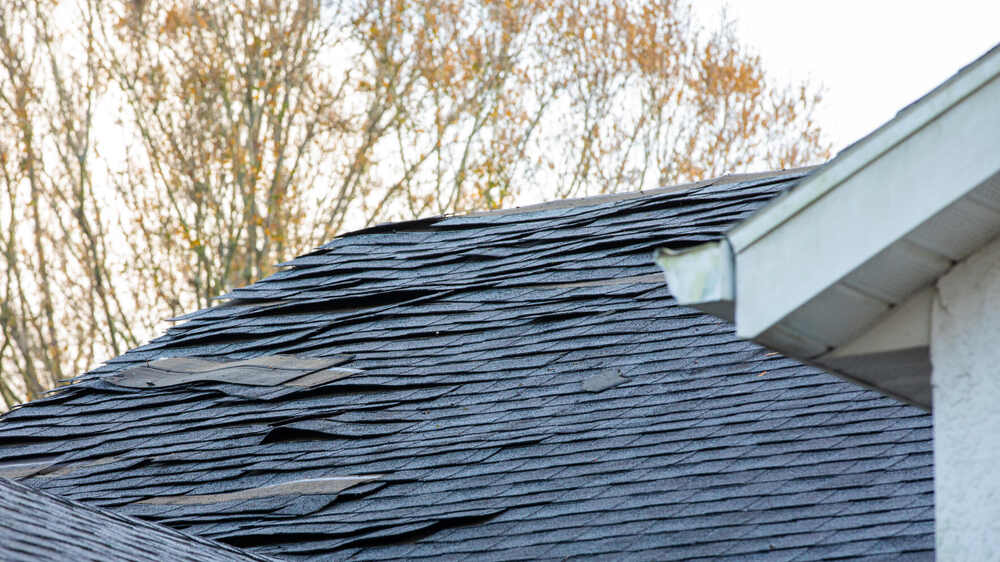
The most common signs a Tampa Bay roof needs repair are missing or curling shingles, granules collecting in the gutters, water stains on interior ceilings, cracked or slipped tiles, daylight visible in the attic, sagging rooflines, and rising energy bills. Any one of these on its own is worth a look; two or more together usually means the roof needs attention soon, not eventually. Florida’s combination of intense sun, heavy rain, and hurricane-season wind wears roofs faster than in most parts of the country, so catching these early genuinely saves money.
1. Missing, Cracked, or Curling Shingles
This is usually the most visible sign and the easiest to spot from the ground with a pair of binoculars or even just looking up from the driveway after a windy day. Shingles that are curling at the edges (sometimes called “cupping”) signal the material is aging and losing its ability to shed water properly, even before any are fully missing.
A few missing shingles after a storm is a straightforward repair; widespread curling across the whole roof is often a sign of a roof nearing the end of its life rather than something you patch section by section.
If you notice missing or damaged shingles, professional Tampa Bay roof repair can help determine whether the problem is isolated or part of a larger roofing issue.
2. Granules Collecting in Gutters or at Downspouts
Asphalt shingles are coated with granules that protect the underlying material from UV damage — think of them as sunscreen for your roof. As shingles age, they shed these granules, and you’ll often notice a buildup that looks like coarse, dark sand in your gutters or pooling at the base of downspouts.
A small amount is normal, especially on a newer roof settling in. Heavy, consistent granule loss is a sign the shingles are wearing thin and losing their protective capability.
For more information about Tampa roofing materials, maintenance, and warning signs, see our Complete Tampa Bay Roofing Guide.
3. Water Stains or Discoloration on Interior Ceilings
By the time water reaches your ceiling, it’s already traveled through the roofing material, the underlayment, and often along rafters before dripping down — which means the actual source of the leak is frequently not directly above the stain you see indoors.
A brown or yellow ring-shaped stain, especially one that grows after rain, is one of the clearest indicators that water is getting in somewhere. Don’t wait for the stain to spread before calling someone; a small stain today is a much cheaper fix than the same leak after another rainy season.
If the leak becomes active or storm damage has exposed part of your roof, you may also need emergency roof repair to temporarily protect the property from additional water intrusion.
4. Cracked, Slipped, or Missing Tiles
Tile roofs are common across Tampa Bay and generally durable, but individual tiles do crack from impact (falling branches, foot traffic, even hail) or shift out of alignment over time.
A cracked tile doesn’t always leak immediately, since the underlayment beneath provides a secondary barrier — but that underlayment isn’t designed to be a permanent primary defense. Once it’s exposed to direct sun and rain through a cracked or missing tile, it degrades faster, and what started as a $150–$400 tile swap can turn into underlayment repair if left unaddressed.
For homeowners considering tile roofing or dealing with damaged tiles, our guide to tile roof installation and maintenance provides additional information about tile roofing systems.
5. Daylight Visible in the Attic
If you can get into your attic safely, this is one of the most reliable ways to check for roof problems most homeowners never think to look for. Turn off any attic lights and look for pinpricks or larger gaps of daylight coming through the roof deck.
Also check for damp insulation, dark water staining on the wood, or a musty smell — all signs of moisture intrusion that hasn’t yet shown up as a ceiling stain inside the living space.
If you find evidence of water intrusion, avoid walking on questionable sections of the roof yourself. A professional inspection can determine whether the problem involves shingles, flashing, underlayment, or the roof decking.
6. Sagging Rooflines or Soft Spots
A roofline that dips or sags, or decking that feels soft or spongy when walked on (something your contractor checks, not something we’d recommend testing yourself), points to structural water damage — usually to the plywood or OSB decking beneath the roofing material.
This is a more serious sign than the others on this list, because it often means the damage has been present and unaddressed for a while. Sagging is one of the clearer situations where an inspection needs to happen soon rather than being added to a list of things to check “eventually.”
7. Unexpectedly High Energy Bills
This one’s easy to miss because it doesn’t look like a roof problem at all. A compromised roof — whether from damaged flashing, gaps around vents, or worn-out attic insulation exposed by water damage — lets conditioned air escape and outside heat in, which shows up as your air conditioner working harder and a bill that’s higher than the season would explain.
If your energy costs have climbed without an obvious reason (like a rate increase or a hotter-than-usual month), it’s worth having your roof and attic checked alongside your HVAC system.
What to Do If You’re Seeing These Signs
None of these signs on their own necessarily means a full replacement — most point toward a repair, and catching them early keeps it that way. The risk is in waiting: a small leak or a handful of missing shingles left alone through a Florida rainy season can turn into decking rot, mold, or a much larger repair scope than what you started with.
A free inspection is the fastest way to know what you’re actually dealing with. A trained eye can tell the difference between cosmetic wear and something that needs immediate attention, and can check the areas — attic, flashing, decking — that aren’t visible from the ground or even from most vantage points around your property.
If you’re unsure whether your roof needs a repair or replacement, a professional inspection can help determine the appropriate scope of work before you commit to a larger project.
Call (727) 439-1844 or contact our roofing team to schedule a free roof inspection anywhere in Tampa Bay.
Frequently Asked Questions
How can I tell if my roof is leaking without going on it myself?
Check your attic for daylight, damp insulation, or water stains on the underside of the decking. Inside the home, look for ceiling stains, peeling paint near the ceiling line, or a musty smell in upper rooms. Outside, check gutters for granule buildup and look for visibly missing or curling shingles from the ground.
How often should I get my roof inspected in Florida?
Most roofing professionals recommend an inspection at least once a year, plus an additional check after any major storm or hurricane, even if no damage is immediately visible. Florida’s storm frequency means damage can occur and go unnoticed longer than in calmer climates.
Can a small roof leak wait, or does it need immediate attention?
It’s safer to treat any active leak as something needing prompt attention. What looks minor from indoors is often more extensive at the roof level, and Florida’s frequent rain means a small leak rarely stays small for long once water has a path in.
Do cracked roof tiles always mean I need a repair right away?
Not always immediately — the underlayment beneath tile provides some backup protection — but a cracked or missing tile should be repaired within a reasonably short window, since ongoing sun and rain exposure will degrade that underlayment faster than it’s designed to handle long-term.
Why would my energy bill signal a roof problem?
Roof damage can compromise attic insulation or create small gaps that let conditioned air escape, forcing your HVAC system to work harder. If your bill has risen without an obvious explanation, it’s worth having the roof and attic checked alongside the AC system.
What’s the difference between normal roof wear and a sign of real damage?
Some granule loss, slight fading, and minor wear are expected as a roof ages. The signs in this list become concerning when they’re widespread, progressive (getting visibly worse over weeks or months), or paired with an active leak — that combination is what separates normal aging from something that needs a repair call now.